

Some eyes don’t get along with standard contact lenses. A cornea can curve unevenly, or an eye can dry out a few hours after a lens goes in, and the usual soft options may not be enough.
That’s where a different design could come in handy. Scleral lenses are large gas-permeable lenses that vault over your cornea and rest on the sclera, the white part of your eye, with a pocket of saline underneath that keeps the surface hydrated while you wear them. Ask about them during a contact lens fitting, or bring it up at your next eye exam if scratchy afternoons sound familiar.
What Scleral Lenses Are and How They Work
The saline fills the space between the lens and your cornea, cushioning it with moisture instead of pressing against it. Light then travels through a smooth front surface on its way in.
Their material matters too. Gas-permeable plastic lets oxygen reach your eye, and a small amount of tear fluid moves in and out with every blink. Most scleral lenses measure 15 to 20 mm across, so they’re noticeably wider than a soft lens.
How Scleral Lenses Differ From Regular Contacts
Soft contacts rest directly on the cornea, the sensitive dome at the front of your eye. A scleral lens vaults over the cornea to tissue with far fewer nerve endings, which is why plenty of people find sclerals comfortable once they’ve adjusted.
That wider diameter tucks under your eyelids and holds the lens steady when you blink or glance sideways, so your vision can stay more consistent throughout the day.
Who Can Benefit From Scleral Lenses
These lenses can help people whose eyes need something regular contacts can’t offer. Two groups tend to notice the difference most.
Support for Irregular Corneas
Glasses correct light passing through a smooth, predictable surface. When the front of your eye is warped, a prescription can only do so much.
Keratoconus thins the cornea and lets it bulge into a cone shape, which blurs and distorts what you see. Scarring from an injury or infection can do something similar, and so can an unpredictable healing pattern after corneal surgery or a transplant.
A scleral lens covers that uneven surface with a regular one while the saline fills in the dips underneath. As a result, light may focus more evenly.
Relief for Dry Eye
Gritty, stinging eyes by mid-afternoon often point to dryness that a lubricating drop can’t keep up with. The reservoir under a scleral lens holds moisture against your cornea for hours.
That can bring relief with severe dry eye disease, including dryness driven by an autoimmune condition like Sjögren’s syndrome. Some patients wear sclerals purely for comfort, even when their vision is fine without them.
Types of Scleral Lenses
Scleral lenses come in several diameters, and each one arches over a different amount of your eye:
- Corneo-scleral lenses are the smallest and rest just past the edge of the cornea.
- Mini-scleral lenses fall in the middle range and cover more of the white of your eye.
- Full scleral lenses are the largest and vault the highest, so they hold the deepest layer of saline.
Your size matches your eyes rather than being picked off a shelf. Smaller lenses can be easier to handle when you’re new to sclerals, while larger ones hold more fluid for eyes that run very dry. Your optometrist will weigh your eye shape against how long you need the lenses each day.
What a Scleral Lens Fitting Involves
Every lens is built for one set of eyes, so plan on a few appointments rather than a single visit:
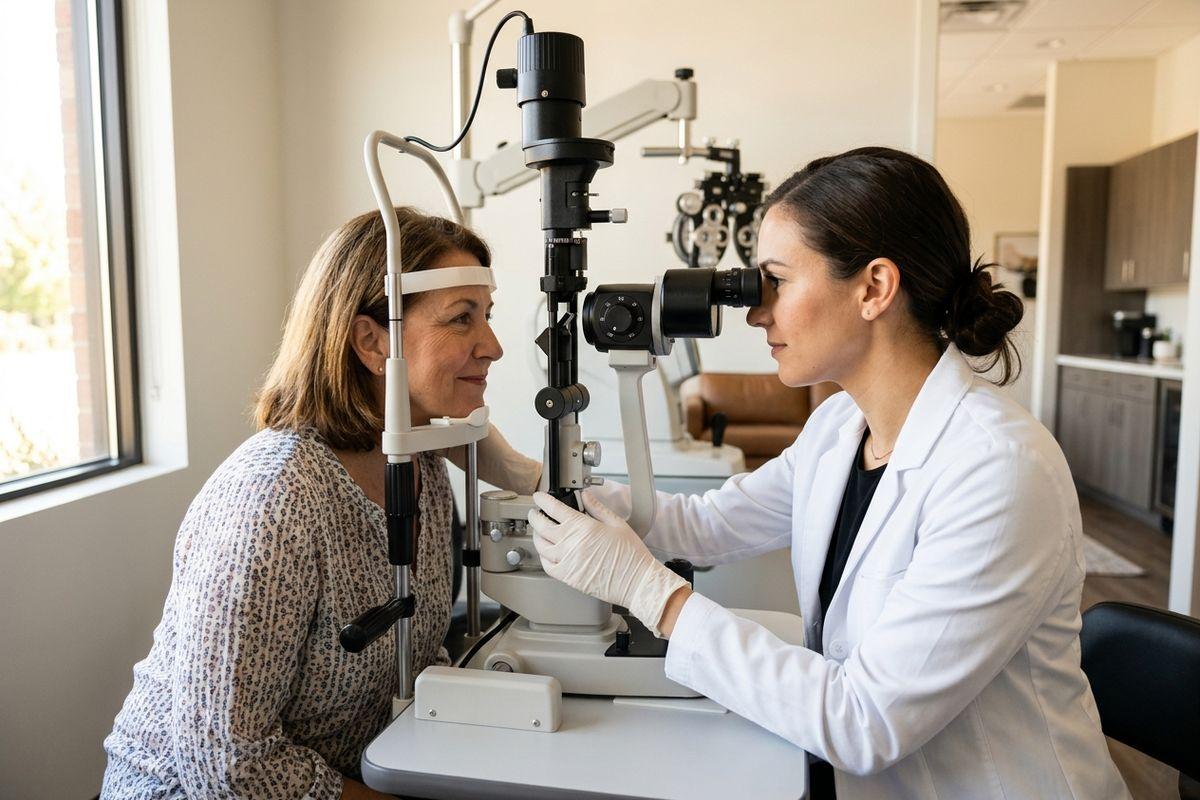
- Start with an exam that checks your eye health and measures your cornea’s curvature.
- Get digital maps of your eye to guide the lens design.
- Try diagnostic lenses so we can watch how they vault and settle over a couple of hours.
- Come back to learn how to insert, remove, and clean your lenses, and to fine-tune the fit.
Handling takes practice. Most people get comfortable with filling, placing, and removing a lens within a week or two, and a small suction plunger makes removal easier.
Daily Wear and Care Tips
Once your lenses fit well, a simple routine keeps them comfortable and clean. Most wearers enjoy around 10 to 14 hours of comfortable wear each day.
A few habits go a long way:
- Wash and dry your hands before you touch your lenses.
- Fill the lens with fresh saline before you put it on.
- Avoid swimming while wearing them, since water can carry germs against your eye.
Common Questions About Scleral Lenses
Sclerals are custom-made, so they run higher than off-the-shelf soft lenses, and some benefit plans cover part of a medically necessary fitting. Check yours before you begin.
Comfort is the other big one. You may feel the lens against your eyelid for the first several days, and that awareness often eases as you adjust.
Sleeping in them isn’t recommended. Take your lenses out at night so your cornea can rest, and ask about naps if your schedule includes them.
Book a Scleral Lens Fitting
Scleral lenses can open up options when glasses and standard contacts fall short, whether the issue is an uneven cornea or dryness that won’t let up. An exam can tell you whether your eyes are a good match for them.
Bring your questions to Summit Eyecare Centre, and we’ll walk you through the process, from the first measurement to your follow-up. Book an appointment today, with Saturday hours available to fit your week.