
Your eyes change over the years, and that’s normal. But if a fresh pair of glasses stops working within months, or streetlights start smearing into streaks on your night drives, pay attention. Keratoconus is one of the more common reasons behind that kind of vision change.
If you notice frequent prescription changes, blurry or distorted vision, or new nighttime glare, book an eye exam soon, as early care gives you more options for managing keratoconus.
What Is Keratoconus?
Your cornea is the clear, dome-shaped layer at the front of your eye. It focuses light so images land sharply at the back of your eye.
With keratoconus, the cornea thins and bulges outward into a cone shape over time.
That cone bends light differently than it should. Straight lines can look wavy, streetlights can smear into streaks, and a new prescription can feel off within months.
Keratoconus often shows up in your teens or 20s, though it can appear later too. If you find it early, you’ll have more room to manage it before everyday tasks like reading or night driving get harder.
Signs You Shouldn’t Ignore
Small vision changes are easy to brush off. Watch for these signs and book an exam if they start piling up:
- Blurry or distorted vision that new glasses don’t fully correct
- Prescription changes that come more often than before
- Sensitivity to light, glare, or halos around lights at night
How to Tell if Keratoconus Has Progressed
Keratoconus can move quickly. Your vision may worsen faster than expected, or new glare and halos can show up within a few weeks.
If your glasses stop correcting the way they used to, don’t brush it off. Book an exam and let your optometrist track the change from there.
Habits That Can Make Things Worse
A few everyday habits add strain to a cornea that’s already thinning. Cut back on these to protect your eyes:
- Rubbing your eyes often, which puts pressure on the cornea
- Skipping regular eye exams that could spot changes sooner
- Ignoring new vision changes instead of getting them checked

How Your Optometrist Checks for Keratoconus
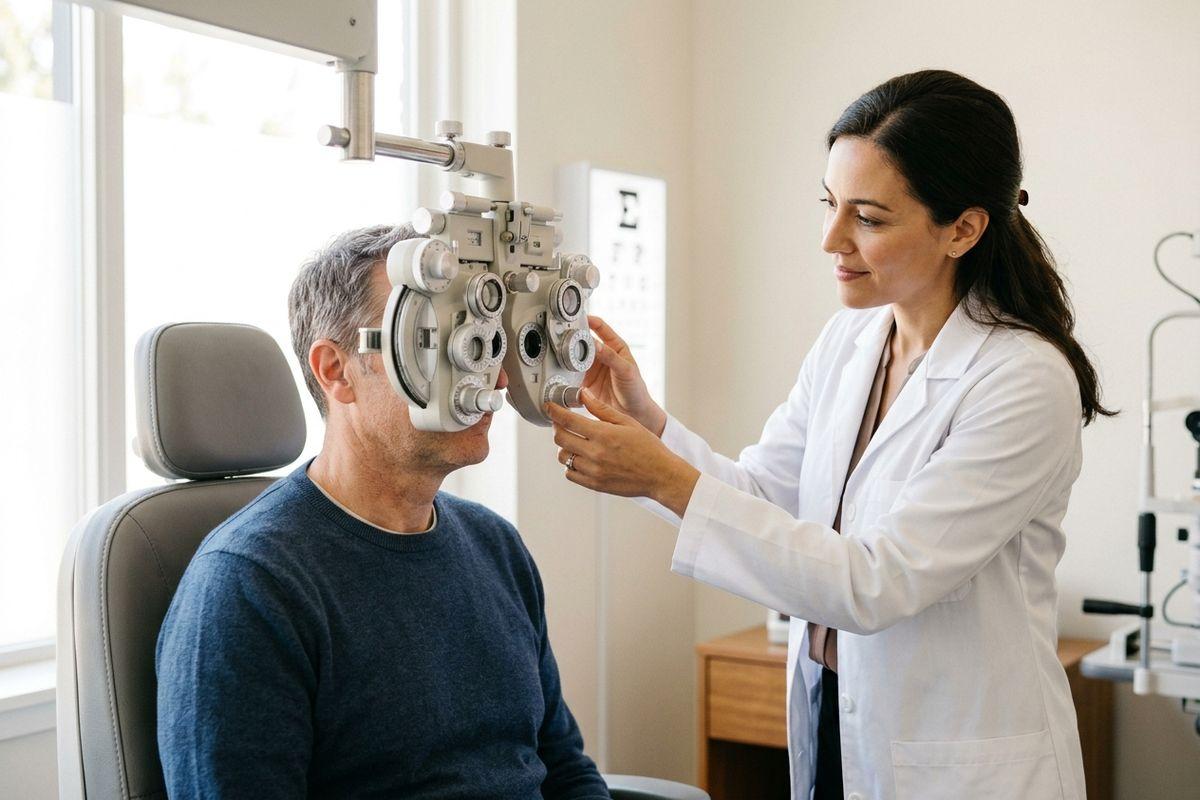
An exam starts with a conversation. Tell your optometrist what you’ve noticed and whether keratoconus runs in your family, since family history can raise your risk.
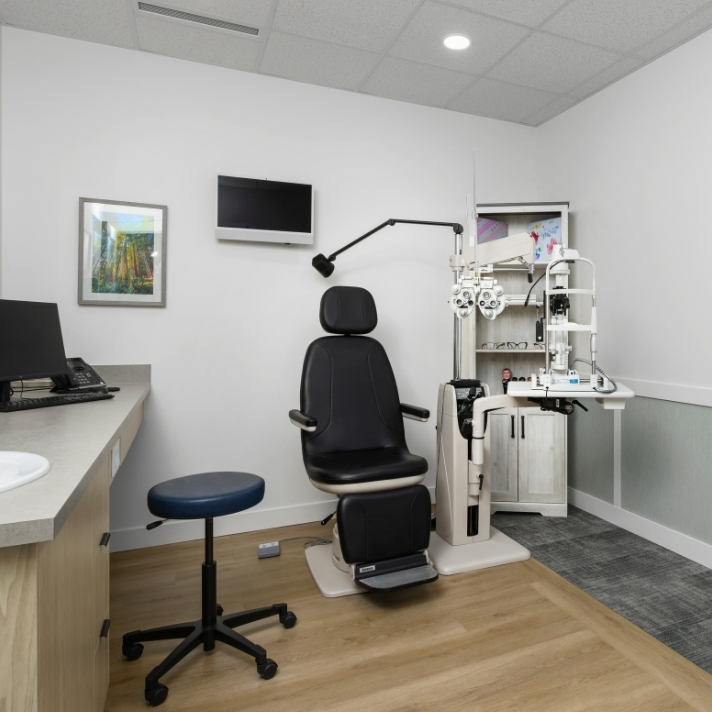
Next comes corneal mapping. This scan builds a detailed picture of your cornea’s shape and thickness, so your optometrist can spot a cone forming even when it’s slight.
Mapping can flag keratoconus early, sometimes before your vision feels off. And an early answer opens up more paths for treatment.
Treatment Options to Help Your Vision
The right treatment depends on how far keratoconus has progressed and how your eyes feel day to day. Here’s what your optometrist may walk you through.
Glasses and Contact Lenses
In the early stages, glasses or soft contact lenses can sharpen your vision.
As the cornea steepens, hard or scleral lenses vault over the cone for clearer, steadier vision. Hybrid lenses pair a firm centre with a soft edge for added comfort during long days.
Procedures for Stronger Corneas
Some treatments work on the cornea itself. Corneal cross-linking uses light and vitamin drops to strengthen the tissue and help slow progression.
Small ring segments can flatten the cone, and for advanced cases, your optometrist may discuss a cornea transplant.
What’s New in Keratoconus Care for 2026
Care keeps advancing. Laser-guided cross-linking targets treatment with more precision, which may mean faster healing and less discomfort afterward.
Some treatment plans now combine methods in a single visit to support your overall vision quality.
Don’t Wait on Your Vision, Book Your Exam
The sooner you act on vision changes, the more options you tend to have. If your prescription keeps changing or night glare is creeping in, book an exam and get ahead of it.
Our Saturday hours make it easier to fit an exam around work and family plans. And most extended health and insurance plans can be billed directly, so there’s less paperwork on your end.
Reach out to Summit Eyecare Centre and book an eye exam today. Your eyes, and your family, deserve it.